
by: Nur Hafiz Abdurahman and Lays Fenilli
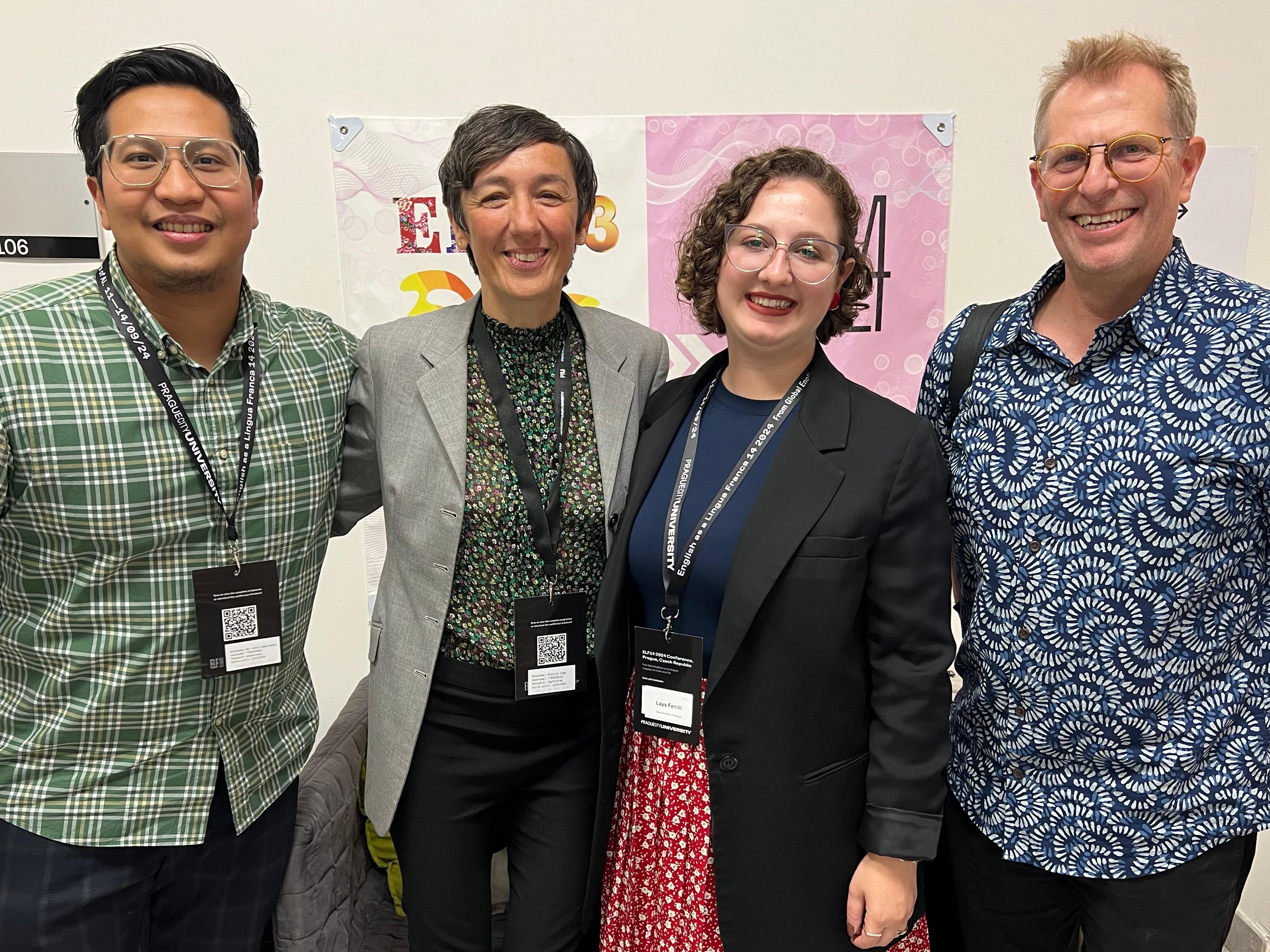
This year’s ELF14 conference was held in person (with an online participation option) in Prague, marking the first face-to-face event since ELF12 in Medellin, Colombia, five years ago. The previous ELF13 in 2022 was mainly a webinar hosted in Taiwan. ELF14 took place from September 11-14, 2024, across two main venues: Prague City University and Charles University, with a hybrid conference option.
Day 1 (September 11): The event kicked off with a drinks reception and registration at Prague City University in the afternoon, filled with excitement as ELF scholars reconnected. Many attendees expressed their joy at the return of on-site conferences.
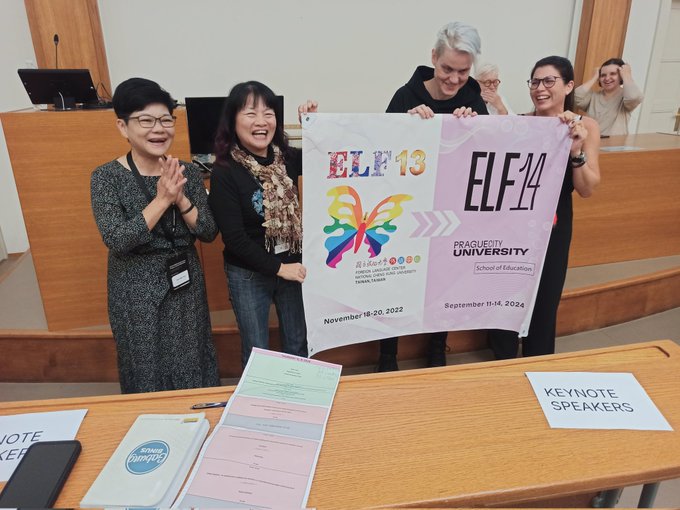
Day 2 (September 12): The morning session at Charles University featured a symbolic handover from ELF13 host Professor Wenli Tsou to the current hosts: Dr. Veronica Quinn Novotna, Dr. Jirina Dunkova, Professor Peter Howe (Prague City University), and Professor Jakub Rakosnik (Charles University). The first plenary session, led by Professor Barbara Seidlhofer along with Dr. Martin Dewey and Dr. Marie-Luise Pitzl, focused on the evolution and future of ELF research. This was followed by a Fireside chat between AI experts Jakub Bares and Kerstin Cable, moderated by Dr. Jirina, discussing the relevance of AI in English language learning. After a coffee break, Professor Heath Rose delivered a plenary on the future directions for Global Englishes/ELF intervention research in curricula. Dr. Nicola Galloway concluded the morning session with her thoughts on Global Englishes.
The afternoon sessions at Prague City University featured parallel sessions where participants shared their research through individual presentations and colloquia, followed by Q&A sessions. The day ended with guided tours of Prague Castle and Prague City at night.
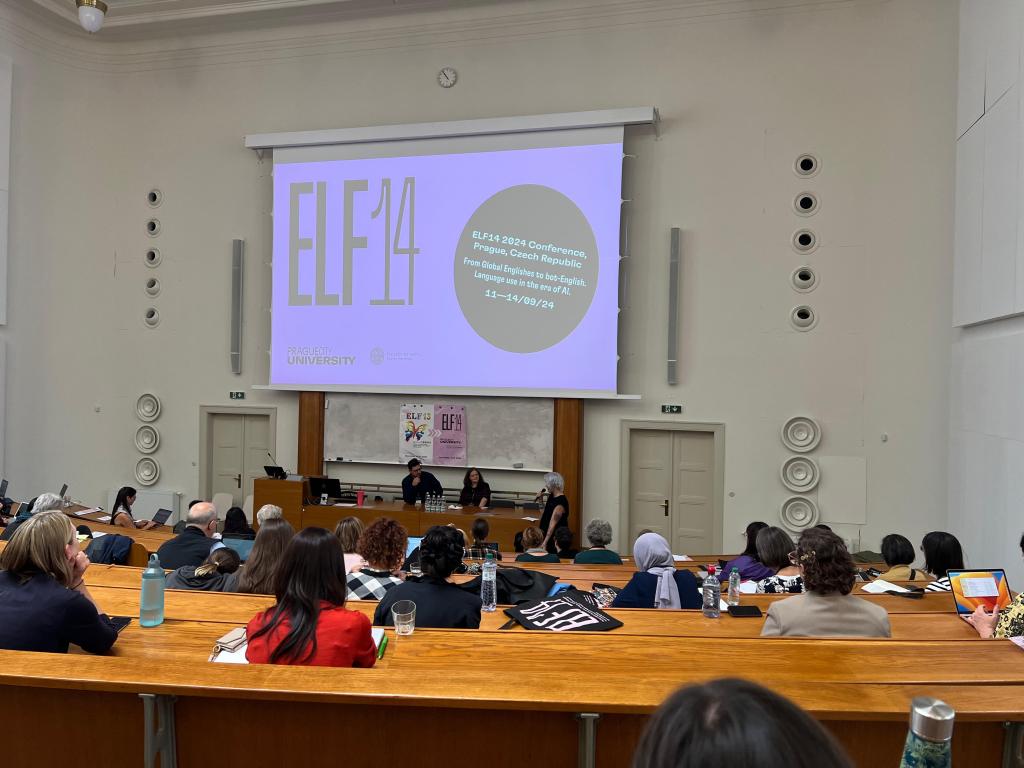
Day 3 (September 13): Held at both Prague City University and Charles University, the first plenary featured the CME Team with Dr. Alessia Cogo discussing “Finding ELF in Critical Language Pedagogy,” emphasizing the importance of critical consciousness and intercultural perspectives. Dr. Eowyn Crisfield’s plenary “Polarity Thinking, Liminal Spaces, and ELF” followed, addressing binarisms in ELT and advocating for a learner-centered approach. Dr. Nicos Sifakis then spoke on the integration of ELF into mainstream ELT, promoting ELF-aware interventions to enrich traditional practices. The day continued with various colloquia and presentations on topics like ELF and ELT, translanguaging, and sociolinguistics.
Day 4 (September 14): The final day began with a plenary by Dr. Yasemin Bayyurt on the intersection of ELF and disciplinary literacies in higher education. This was followed by sessions from Dr. Wenli Tsou on ESP professional development and Dr. Kurt Kohn on ELF communication from a psycholinguistic perspective. The conference concluded with a Fireside chat titled “Matters Arising,” chaired by Dr. Henry Widdowson, featuring prominent ELF researchers discussing the past, present, and future of ELF.
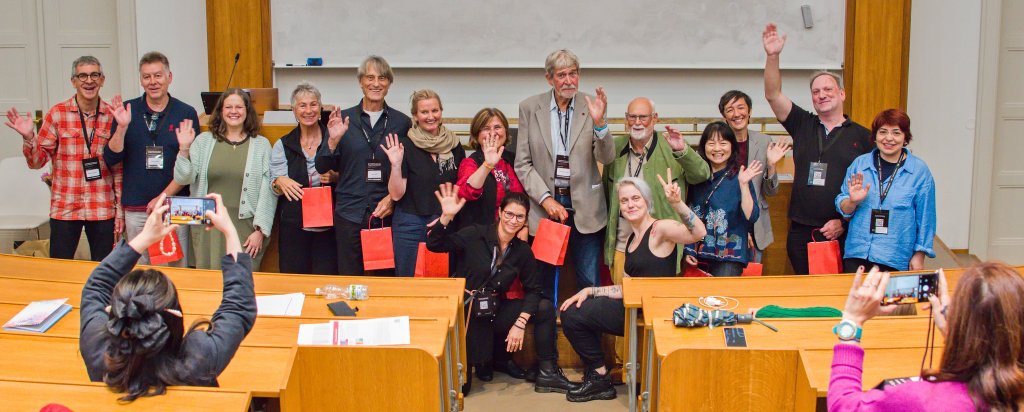
Event organizers Veronika Quinn Novotna and Jiřina Dunková wrapped up with closing remarks, highlighting the participation of over 100 universities, 160 speakers, and representation from 5 continents, along with more than 10 teacher workshops. They also suggested holding the next ELF15 conference in a Global South country in 2026.
 multilingualismwithenglish.org