
Supporting students to use generative AI tools ethically and effectively in academic writing
Post-event Report
By: Lays Fenilli (UEM/Goldsmiths)
Generative AI tools for academic writing: a friend or foe? A blessing or a curse? These were some of the questions raised at the latest CME talk, which took place last Thursday (16th May 2024) at King’s College London.
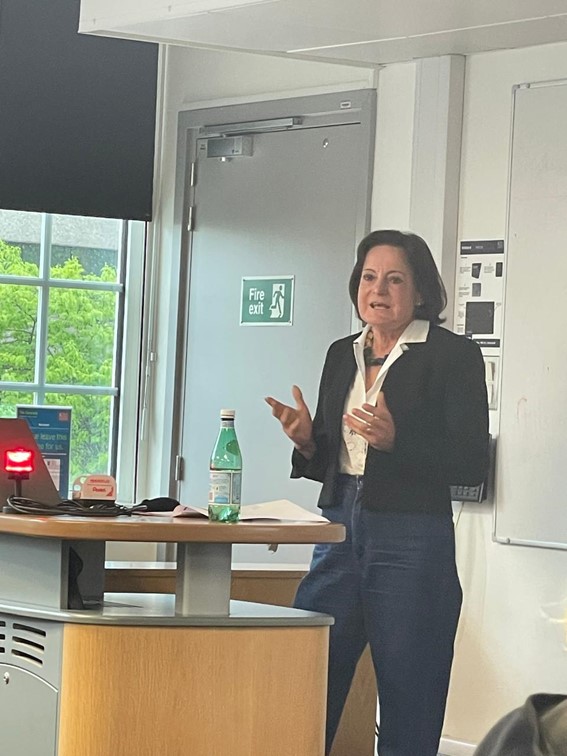
In her talk, Professor Ursula Wingate presented some results from her current project named “Supporting students to use generative AI tools ethically and effectively in academic writing”. She first presented some concerns that researchers have regarding AI use in academic writing, for example, breaches of academic integrity and plagiarism. After that, she also presented some affordances that are being pointed out as research evolves on the topic, such as helping L2 students overcome language-related inequities, promoting the use of their full linguistic repertoire and allowing more time for creativity.
After this introduction, Professor Wingate presented some examples of University guidelines for the use of AI and brought the attention to the fact that these guidelines do not foreground a critical and AI-literate use of software like generative AI (e.g. ChatGPT) or machine translation (e.g. Google Translator) neither for students nor staff. Instead of “embracing and adapting” to the use of these technologies, the guidelines impose several limitations of their use for writing assessment tasks or essays.

With the help of her research collaborator Rebecca Slinn, Professor Wingate then presented the workshop material developed for an intervention, which involved 23 participants from 4 BA and MA programmes. The findings showed some positive and negative reactions. There were some negative perceptions from students, stressing concerns about autonomy and insecurity regarding university policies. However, the project also highlighted the positive impact that AI can have on students’ academic writing as well as the importance of guidance, critical agency and the need for co-construction of Universities’ AI-related policies.
 multilingualismwithenglish.org